
It’s true, a cluttered home is a cluttered mind. And we all know that feeling of being overwhelmed the moment we walk into a messy space. To help you clear this mental load, we’ve consulted with organising experts Lemon Organisers, MK Method and Clutter Free. Ahead, we’ll share their tactics to help you win the storage war once and for all with a complete 30-day decluttering plan.
How To Prepare For A 30-Day Decluttering Challenge
If you’re unsure how to begin, you’re definitely not alone. MK Method shared their best advice for setting yourself up before the challenge begins:
“To prepare for a 30-day decluttering challenge, start by setting clear goals on what you want to achieve.”
- Identify the areas in your home or workspace that need decluttering and prioritise the areas which are your biggest concern. “We usually start with the kitchen, as it is the heart of the home.”
- Buy supplies like boxes, trash bags and labels (masking tape and a permanent marker).
- Schedule time each day for decluttering.
- Consider asking a friend or family member to help; it’s always way more fun doing it with someone. “We should know, we do it as a team. It becomes a phenomenal ‘kuier‘ session.”
- Always take before photos to track your progress; it’s remarkable to see the transformation!
Who Should Try A Decluttering Challenge?
According to Lemon Organisers, this challenge is ideal for anyone feeling overwhelmed by their surroundings, constantly losing track of items, or longing for more calm in their environment. It’s especially helpful for busy women, families, or people going through big life changes – new baby, downsizing for retirement, or after a divorce. If you’re juggling a lot and need to get back in control quickly, this challenge is for you.
READ MORE: Can Decluttering Really Improve Your Mental Health? Here’s What Psychologists Say
Expert Tips For Decluttering Success
Clutter Free gave us some of their go-to strategies for making decluttering easier and more effective:

1. Set A Date And Time
Schedule your sessions and let loved ones know in advance so they aren’t surprised by the chaos. Decluttering can involve a “messy middle,” where things look worse before they improve. Be kind to yourself – it took time to accumulate clutter, so it’ll take time to work through it.
2. Use Four Piles
Keep, donate, trash and sell. Use boxes, bags, or containers to sort items. Place a “relocation basket” at the door of each room and at the end of your session, redistribute items into the right piles. This prevents constant back-and-forth and keeps you focused.
3. Keep Specific Black Garbage Bags
“I like using black garbage bags for decluttering because they prevent you from second-guessing your decisions.” Once an item is in the bag, you can’t see it, which makes it harder to retrieve. Our initial, instinctive decisions are often the correct ones, but if we hesitate or revisit the bags, our brains automatically “back pedal,” making us question our first choice.
Tried-and-Tested Decluttering Methods
MK Method shared some of the most popular approaches you can use:
- FlyLady: Break down decluttering into small tasks, focusing on one area at a time.
- The 1-Touch Rule: Make a decision about an item as soon as you touch it.
- The 4-Box Method: Sort items into Keep, Donate, Sell and Toss boxes.
- KonMari Method: Sort items by category, hold each item and keep only what brings you joy.
- Decluttering by Category: Focus on one type of item at a time, like clothes or books.
- The Home Edit: Organise items into categories and use storage solutions.
- MK Method: Just start, simply, just start.
READ MORE: 6 Easy Ways To Declutter Your Kitchen
Strategies To Avoid Feeling Overwhelmed
Feeling overwhelmed during the decluttering process is a common experience, but there are methods that can be used to avoid feeling this way. Lemon Organisers have provided us with a few strategies to try:
- Break tasks into 15 to 30-minute blocks and don’t aim for perfection.
- Have a “maybe” box for tough decisions and revisit it later.
And remember, if you do get overwhelmed, it’s okay to call in a professional. As they say, “As someone objective, we can help guide and advise you on some of the areas and/or decisions you are struggling to make.”
Should You Go Room-by-Room Or By Category?
According to MK Methods, both room-by-room and category-based approaches can be effective.
Room-by-room:
Pros: Helps you focus on one space at a time, and you can see progress in each room.
Cons: Might lead to scattered efforts if you’re switching between categories (e.g., clothes in one room, books in another).
Category-based:
Pros: Allows you to tackle all similar items at once (e.g., all clothes, all books), making decision-making easier.
Cons: Might feel overwhelming if you’re jumping between different rooms.
Some people also use a hybrid approach, starting with a specific category in one room and then moving to the next room for the same category.
Handling Sentimental Items
Letting go of items with sentimental value can be difficult. We asked ClutterFree for advice on how to deal with this, and they recommended donating items to charity on the same day.
A simple search for “donation centre near me” will reveal many options. For example, organisations like Tears accept old pillows, throws, sheets, duvets and blankets. Children’s hospitals like The Red Cross or Maitland Children Cottage Home and The Haven Night Shelter are also great places to donate.
Pet shops often accept books to help raise money for shelters. Additionally, Oasis, which employs adults with mental disabilities, accepts valuable items. For larger donations, Help The Rural Child can even come with a truck to collect everything. You don’t need to pack everything perfectly, as it will be unpacked, cleaned and sorted at the donation centre.
Clutter Free always suggests donating rather than trying to sell every item. Donating is the quickest way to get items out of your home, making it a win-win situation for both you and the recipients.
READ MORE: 12 Books To Help You Survive Year-End Fatigue
Maintaining Your Clutter-Free Home
MK Method’s top tips for maintaining a clutter-free home:
1. Create Habits
Hang that handbag up right away instead of placing it on the dining room table, it takes the same amount of time.
2. One In, One Out
Balance new purchases with letting go of old items. Truly a game changer.
3. Schedule Regular Decluttering Sessions
Sometimes a holiday at home, a weekend in, getting your space sorted feels like the best holiday and break ever. You truly fall in love with your home.
4. Practice Mindful Consumption
Think carefully before buying something new. It’s honestly a premeditated choice you make.
5. Keep Clutter Hotspots Under Control
Regularly tidy up areas prone to clutter. If you walk past it, grab it and place it where it’s meant to be, it does wonders for your step count each day too. Being productive is the best feeling in the world.
6. Accountability
Everyone in the home, including yourself, should be held responsible for the areas they use or affect. Whether it’s keeping a shared space neat and tidy or contributing to chores, ownership fosters a respectful and functional living environment.
Don’t Forget About Digital Clutter
Lemon Organisers has given their POV on digital clutter and this is what they have to say: “Digital clutter can have the same effect on you as physical clutter. Digital mess overwhelms and causes stress just like a physical mess. I encourage sorting and clearing your emails, as well as deleting duplicates, especially in your photos. Make digital decluttering a regular habit. When you find yourself with idle time (like sitting in a doctor’s waiting room), use the time to quickly review and delete unnecessary photos from your phone and stay on top of your email inbox.”
Social Media Effect On Buying Habits
Social media significantly impacts our daily lives, influencing everything from what we wear and eat to our very opinions. MK Methods has shared some of their thoughts on how social media shapes our buying habits and contributes to clutter.
- Showcasing products: Ads and influencer content often highlight the latest trends and must-haves; we forget, they get paid to do it, and secondly, get most of the items for free. Trust me, we know.
- Creating FOMO: Fear of missing out can drive impulse purchases.
- Promoting consumerism: Constant exposure to products can encourage buying more than needed.
As for cleaning and organisation products, while some can be helpful for establishing systems to keep things tidy, MK Methods has observed that people often buy them without knowing how to use them effectively, or they fail to implement the systems after purchase. To avoid this, consider:
- Assessing needs: Before buying, ask if the product solves a specific problem.
- Quality over quantity: Invest in multi-purpose, high-quality items and only do so once you have decluttered.
- Avoiding trends: Focus on timeless solutions rather than trendy products. Think beautiful and functional. It needs to look good and work for you.
Being mindful of social media’s influence and thoughtfully evaluating product needs can help reduce clutter.
READ MORE: Here’s How To Actually Do A Digital Detox, According To Experts
Common Struggles When Organising Homes
According to Lemon Organisers, a common issue people face when organising their homes is underestimating how much they’ve accumulated. Additionally, many people find it difficult to let go of items “just in case” they might need them later.
This is where a professional can provide valuable clarity and emotional distance. Hiring a professional gives you the guidance and momentum needed to make confident decisions. This is in contrast to tackling the task alone, where it’s easy to lose steam and leave the job unfinished.
Organising Products Worth Trying
MK recommends several tools to help with organisation:
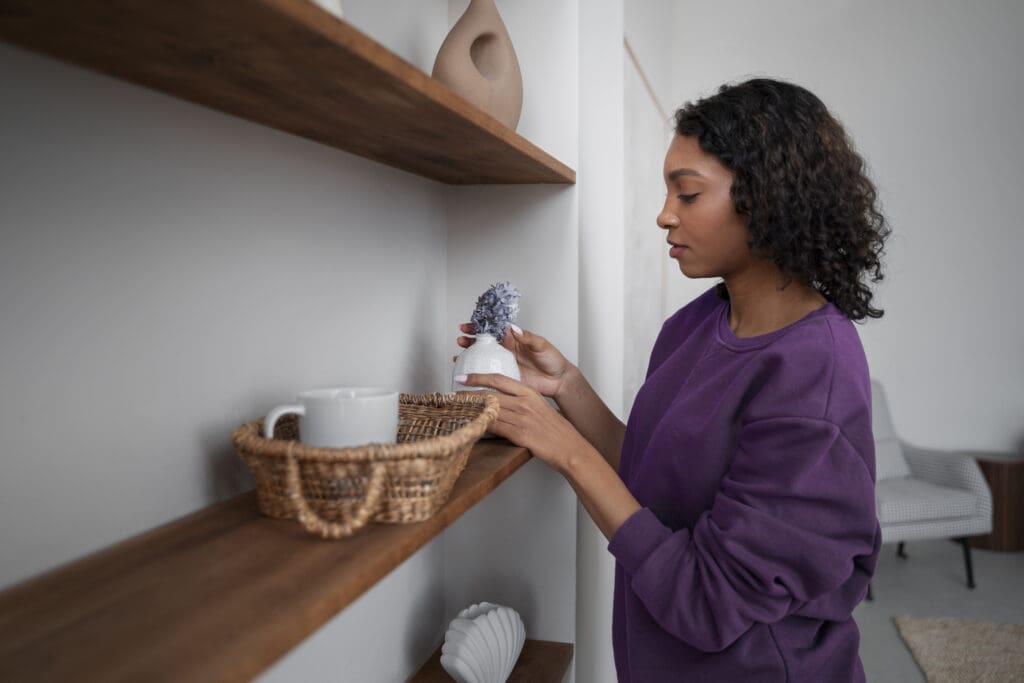
- Storage bins and baskets are great for categorising and containing items like toys, clothes, or linens.
- A label maker is helpful for clearly labelling storage containers, folders, or shelves. MK uses a simple “Brother Labeller” from CNA or Waltons.
- Shelving units are useful for maximising vertical space and keeping items off the floor.
- Drawer organisers help keep drawers tidy and make the most of available space.
- Containers help keep items in the right category, preventing them from getting dusty or misplaced.
Some popular brands for these products include the MK Method online store, @Home, West Pack, Mr Price Home and PEP Home. “These products can help create a more organised and functional space.”
30-day Decluttering Plan:
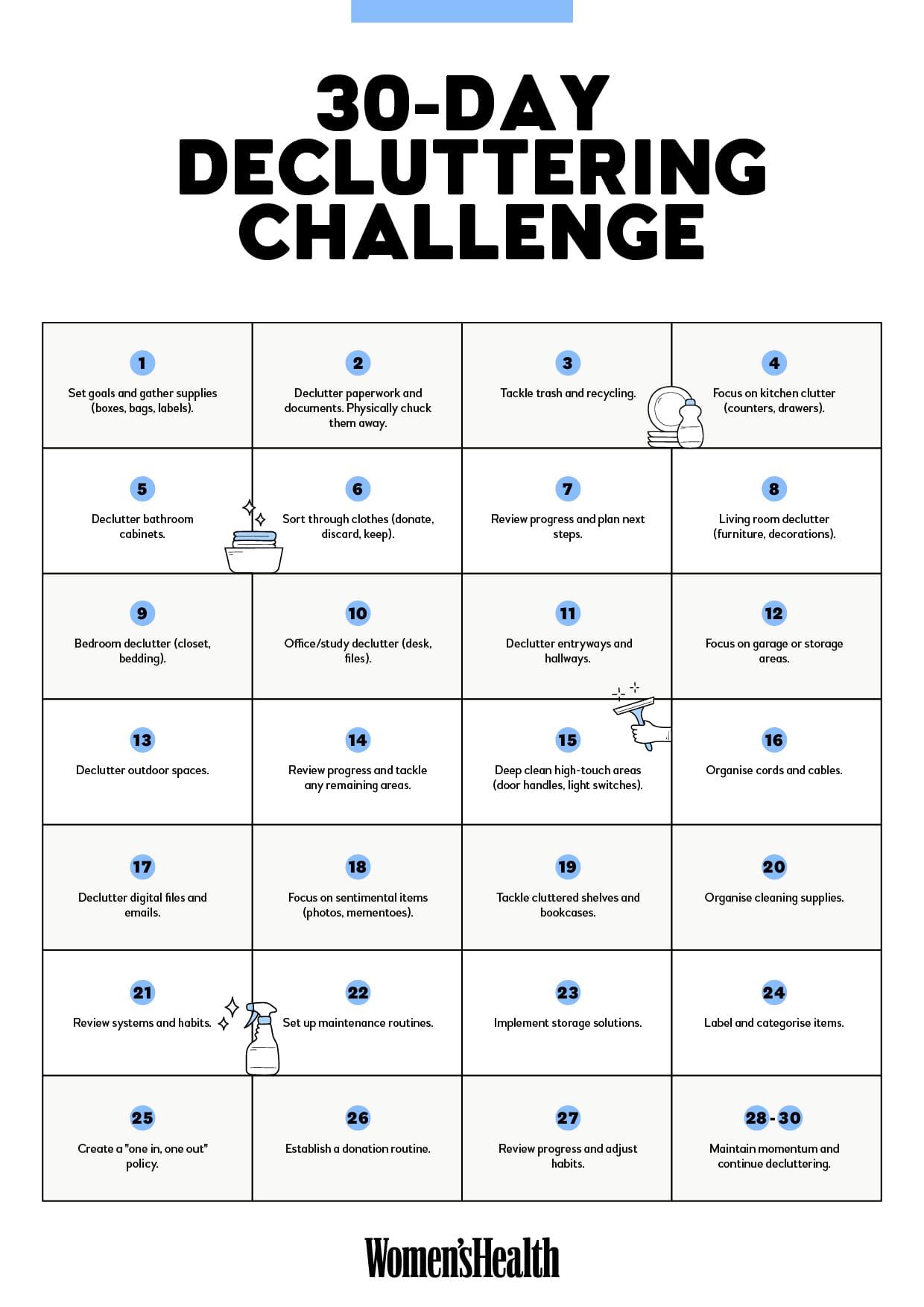
MK Method has mapped out a 30-day decluttering plan you can follow step by step. By the end of the challenge, you’ll not only have a clutter-free home but a calmer, more intentional way of living.
Week 1: Prepare and Purge (Days 1-7)
Focus on the visual clutter in plain sight:
- Day 1: Set goals and gather supplies (boxes, bags, labels).
- Day 2: Declutter paperwork and documents, physically chuck them away (shred the guys up).
- Day 3: Tackle trash and recycling.
- Day 4: Focus on kitchen clutter (counters, drawers).
- Day 5: Declutter bathroom cabinets.
- Day 6: Sort through clothes (donate, discard, keep).
- Day 7: Review progress and plan next steps.
Week 2: Room-by-Room Decluttering (Days 8-14)
Get into the detail of each room:
- Day 8: Living room declutter (furniture, decorations).
- Day 9: Bedroom declutter (closet, bedding).
- Day 10: Office/study declutter (desk, files).
- Day 11: Declutter entryways and hallways.
- Day 12: Focus on garage or storage areas.
- Day 13: Declutter outdoor spaces.
- Day 14: Review progress and tackle any remaining areas.
Week 3: Deep Decluttering (Days 15-21)
Do the micro-organising side of things:
- Day 15: Deep clean high-touch areas (door handles, light switches).
- Day 16: Organise cords and cables.
- Day 17: Declutter digital files and emails.
- Day 18: Focus on sentimental items (photos, mementoes).
- Day 19: Tackle cluttered shelves and bookcases.
- Day 20: Organise cleaning supplies.
- Day 21: Review systems and habits.
Week 4: Maintenance and Organisation (Days 22-30)
Go buy a few organising items you need- call us. We can help guide you:
- Day 22: Set up maintenance routines.
- Day 23: Implement storage solutions.
- Day 24: Label and categorise items.
- Day 25: Create a “one in, one out” policy.
- Day 26: Establish a donation routine.
- Day 27: Review progress and adjust habits.
- Day 28-30: Maintain momentum and continue decluttering.