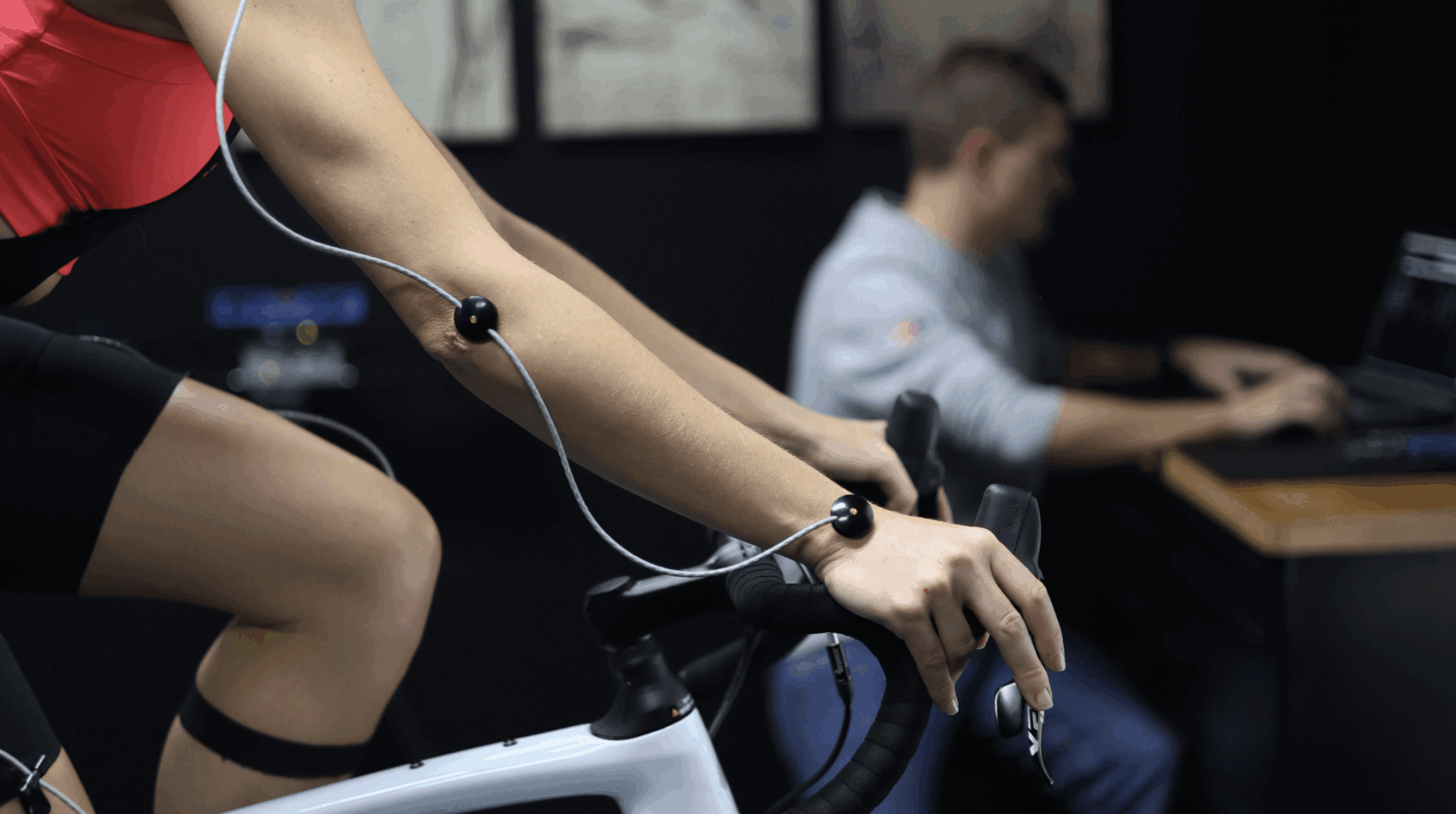
Did you know that most bikes are designed for men’s bodies? That’s “generally’ the standard protocol. While it’s important for everyone to know their bike “size” – yes, bikes have sizes, like running shoes – it’s also particularly important for women to get their bikes adjusted to “fit” their body geometry. This proper bicycle fitment for women is also called a bike fitting – and it’s a game changer for your form and performance.
Certain sports scientists and trained bike fitment specialists can do a proper bicycle fitment for you. That means you can ride faster, further and be more comfortable – while preventing injuries. We asked sports scientist and expert bike fitter, Willem Landman, who works with all kinds of cyclists, from beginner roadies to professional mountain bikers, about bike fitments and why they’re so important. Not only that, our resident cyclist, Amy Hopkins, tested the service out when she got a new gravel bike.
Meet the expert: Willem Landman is an expert bike fitter and works with the Specialized Stellenbosch Experience Centre.
Q: Is it important for everyone to go for a bicycle fitment or only for more “serious” riders?
W: “Even the most basic fitment we offer can have a profound impact on the riding experience. There is often so much more comfort and enjoyment to be had from making a few small tweaks. Your level of riding will determine what it is you are looking for in a bike fitting. Most casual riders are simply looking for comfort, while experienced and pro riders are looking for that last bit of performance still to be had.”
Q: Do you need to go for a fit if you change to cycling sports? Will a road cycling fitment carry through to a mountain bike set-up?
W: “Unfortunately, not all bikes are set up the same. Road and gravel bikes may look similar, but your position is unique to every bike. It’s worth having each bike fitted individually. We often recommend that you have your bike fitted at least once a year if you are a regular rider. Pros will have two or three different fits, depending on the riding season: a slightly more comfortable position during base training season and a fast, aggressive position in race season. For example, I’ve even heard of some pros running shorter cranks in the base season to minimise strain on their knees!
“There is often so much more comfort and enjoyment to be had from making a few small tweaks.” Willem Landman
Q: What are some of the key or typical bike fitment differences you see between a man’s set-up and a woman’s?
W: “The key difference in men’s and women’s bike fitting would be your saddle. Male and female pelvis structures and anatomy differ vastly and it’s important to have the proper saddle for your own body. It’s also important to understand that saddle issues are very common and that you shouldn’t be afraid to mention this to your bike fitter. On average, women need broader saddles than men. In terms of the actual fitting of the bike, your riding style has a bigger impact on how the bike gets adjusted than what your gender has.”
Q: What are some of the key measurements that you look at when doing a fitment?
W: “All bike fitments start by moving the saddle into its correct place. The type of bike will determine where the saddle goes. On a mountain bike, you might want a slightly more forward position for those steep climbs, whereas on a road bike, a slightly more rearward position can aid in glute and hamstring activation. The main thing we look for in saddle position is pelvic stability. Too high or too low, you’ll see it in the hips. Your ankles also give us valuable clues. Excessive ankle drop at the bottom of the pedal stroke might indicate a saddle height that is too low. Toe pointing could mean the saddle height is too high, or in some cases, the saddle is too far back.
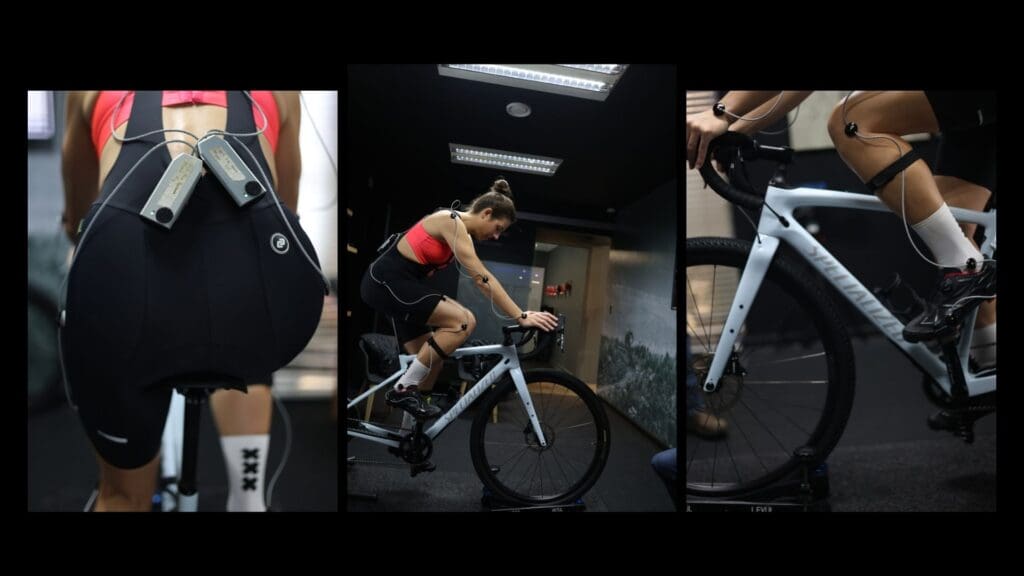
Q: What tech or software tools do you use?
W: “Our Retul software gives us ample data to use when adjusting the bike! Being able to dynamically capture a rider’s movements means we can see things as they would be out in the real world. Our 3D motion capture system can analyse every millimetre of movement to ensure nothing is missed. The riders’ right and left sides are compared to ensure symmetry on the bike.”
Q: How long does it typically take to adapt to your new fit and how do you monitor progress afterwards?
W: “We work on an adaptation period of between four and six weeks with a follow-up appointment included in the price of the first fitment, to address any changes. We recommend doing shorter rides for the first week or so to allow your body time to adjust to the changes.”
Q: Lastly, how should riders best prepare for a fitting?
W: “When doing the Body Geometry (Retul) fitment, it is important to bring your tightest fitting cycling kit, your shoes and any other parts such as saddles and stems you might have. We use adhesive Velcro dots to place the markers, so having dry skin, free of oils is crucial. Bring as many questions, concerns, comments and riding feedback as you have. The more the bike fitter knows, the better they can assist in reaching your fitting goals. Oh, and don’t forget the bike!
Ed’s Saddle Pick:
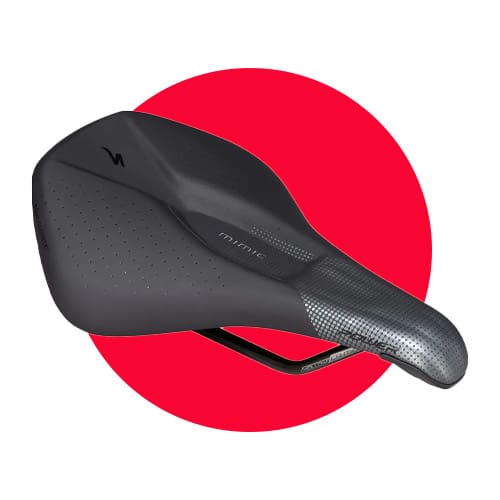
Specialized Power Comp with MIMIC
“I personally love this women’s specific Power Comp saddle that uses MIMIC technology that adapts to your body”
– Amy Hopkins, WH contributor
This article was written by Amy Hopkins.