
At 29, Dominique Olivier’s life was torn apart in an instant. A car accident claimed her husband and toddler’s lives, leaving her widowed and navigating the world with a five-week-old newborn.
In her raw, deeply honest book, Dominique speaks to the things we’re often too afraid to say out loud. She opens up about the “frank, dull nothingness” of maternal numbness and the isolation of solo parenting. Plus, the exhausting process of finding a reason to wake up after trauma.
READ MORE: How Katleho Tsoku Turned Her Grief Into A Platform That Helps Women Nurture Joy
Part memoir, part guide, this is a story about redefining what it means to “move forward.” Dominique shows that even in our darkest chapters, we can find the strength to stay and rewrite our story.
In this extract, she opens up about struggling to bond with her baby in the wake of tragedy. And then, the simple, unrelenting routine that eventually saved them both.
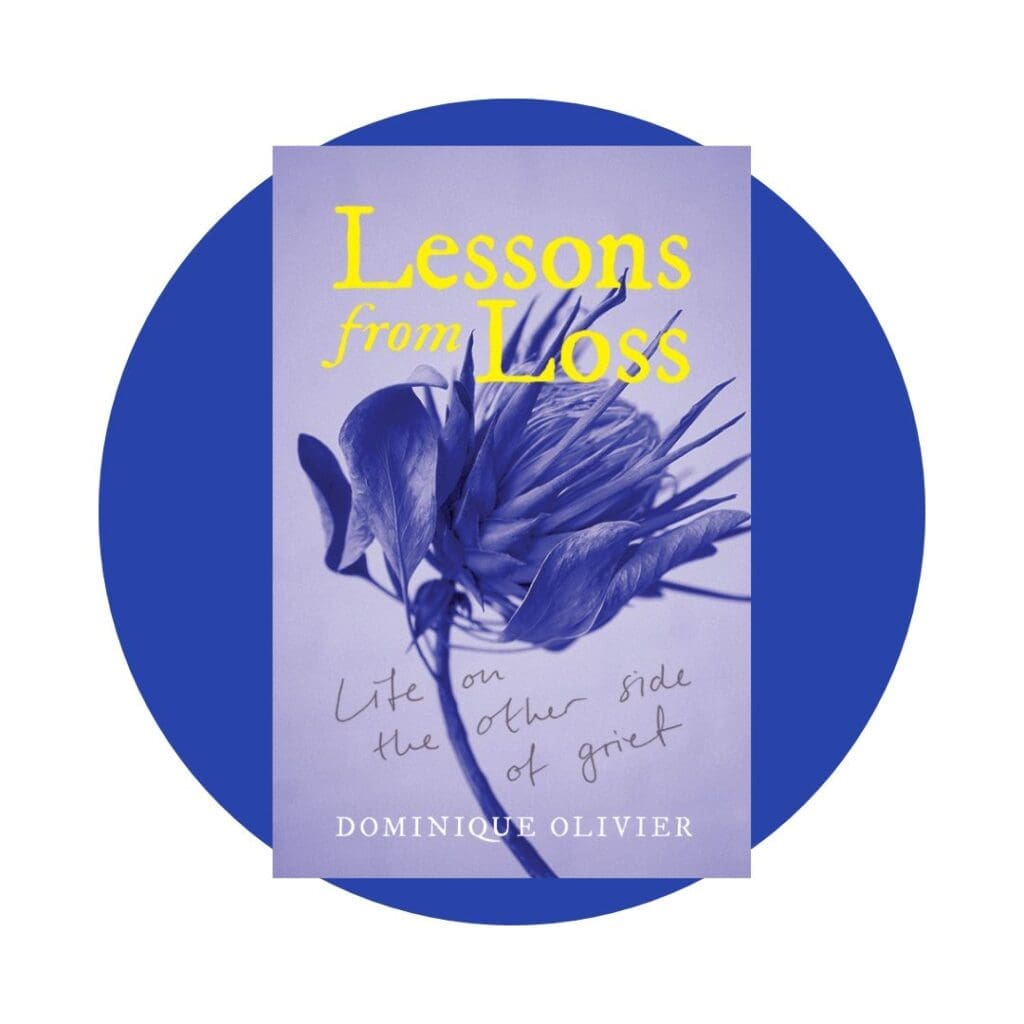
An Exclusive Extract From Lessons from Loss by Dominique Olivier:
The first real job that I had after graduating (not counting a few stints as a waitress) was at an arts-education NGO. During one of our staff training days, I remember that the facilitator spoke about the two types of people in the world – those who are task-orientated, and those who are relationship-focused. To prove her point, she provided an example of a person waking up in the morning, and what their first thoughts might be. The relationship-focused individual might remember that it was someone’s birthday or have a desire to phone a friend whom they haven’t spoken to in a while. The task-orientated person, on the other hand, would start setting up a mental checklist of tasks that they wanted to accomplish during the day.
In some ways, being a task-orientated person helped me to navigate those first strange days immediately after the accident. Life as I knew it had sunk like a ship, and while all that was familiar lay at the bottom of the ocean, I drifted, a lone survivor clinging to scattered pieces of debris. I hadn’t been home since I left our apartment on that Friday afternoon to go to the hospital. Instead, I had moved into the spare room of my mother’s house with nothing but the nappy bag that I had packed for Florence. On the first day after the accident, my father and brother returned to the flat to pick up nappies, clothes and basic toiletries for me and Florence.
“When I looked at her, held her or fed her, I felt … nothing. No love, no hatred or anger, just a frank, dull sort of nothingness.”
There are few things that force you into motion like needing to care for a baby, so in her own oblivious way, Florence was pivotal to my functioning in those early days. I was breastfeeding her exclusively, since she refused to take a bottle, so it was up to me and me alone to feed her every few hours. I was surrounded by family at all times. My mom was a constant presence, my father came over almost every night, and my brother and his wife cut short a holiday in Mozambique to come sleep on my mom’s couch for a week, just to be around. Other friends and family members dropped in regularly.
READ MORE: Postpartum Depression: Why So Many Women Suffer in Silence?
There were many willing hands to hold Florence, but when the time came to feed her, she always came back to me. Looking back now, I’m not sure how I would have got out of bed every day without the fragile security of that known and necessary rhythm: feeding, burping, changing, rocking to sleep on endless repeat.
“I was essentially functioning on autopilot, carrying out the duties of motherhood with as much emotional investment as I would dedicate to washing a load of dishes.”
While I was doing everything that I needed to do to fulfil Florence’s needs, I found myself unable to bond with her. At six weeks old, she was sweet-natured and calm. She was the furthest thing from a difficult or needy baby, but when I looked at her, held her or fed her, I felt… nothing. No love, no hatred or anger, just a frank, dull sort of nothingness. I was essentially functioning on autopilot, carrying out the duties of motherhood with as much emotional investment as I would dedicate to washing a load of dishes.
As days turned to weeks, I became more aware and ashamed of my inability to love Florence. My shame stemmed not just from a place of feeling that I was being ‘unmaternal’, but the idea that I was somehow ungrateful to have her – this one living remainder of my little family that I was allowed to hold onto. Surely my loss should make me love her all the more, should make me cling to her like a life raft, my very own ‘reason for being’. What was so fundamentally wrong with me that I couldn’t muster love for the only thing I hadn’t lost?
“That cry was a thin but unbreakable thread, the only thing keeping me tethered to a world that I desperately wanted to leave behind.”
I hid these feelings deep inside myself, convinced that they were wrong. In company, I played the part of an involved mother, but in private, I struggled to maintain eye contact with my baby. I behaved defensively, like I was some sort of fraud, and as if only she (at six weeks old) could see right through me. Worse still, I began to see her as an obstacle, some earthly commitment blocking me from my true goal, which at that stage was death.
Most nights I went to sleep actively hoping that I wouldn’t wake up, that my life could simply slip away from me before the morning and that I would join Jaendré and Felix wherever they were. I fantasised about dying, about relief from the unfathomable pain that I was permanently in, about reunion – and every time, my fantasy was interrupted by a baby’s cry, a strident and inescapable reminder that I was still needed here. That cry was a thin but unbreakable thread, the only thing keeping me tethered to a world that I desperately wanted to leave behind.
READ MORE: More People Are Using Ketamine For Depression – But How Safe Is It?
“I feel like I am looking in on an episode of a stranger’s life. How could that possibly have been me – the same person who would move mountains for her daughter now?”
Many of the people who visited in the early days told me that I needed to be strong for Florence because I was all that she had left. I listened to them and nodded, but in my heart I disagreed. While I was too numb to feel anything for Florence, I still knew that I wanted what was best for her, and I was steadily convincing myself that what was best for Florence wasn’t me. I wanted her to be loved and cherished. How could anyone as broken as I was give her the love she deserved? Not just now, but every day for the rest of her life? How could I do that if I couldn’t even bring myself to smile at her?
My desire to die was unabating, as was my growing sense of guilt over Florence. I genuinely believed that the best future for her would be one that didn’t include me, but at the same time, I didn’t want her to know that I had taken myself out of her life by choice. The trauma of the accident was bad enough. So, I started writing letters of instruction. One letter, addressed to my brother and his wife, asked that they raise Florence under the pretence that I had also died in the accident.
“By increments, too small to measure, my feelings of obligation towards her were chipped away and replaced – first with liking, then with affection, and, ultimately, with enduring love.”
Another letter, addressed to Jaendré’s cousin (the only other person in the family with young children), asked that he and his wife raise Florence alongside their boys as if she was their own, with no mention of her true parentage or the accident. I was unable to decide which outcome would be best for her, so I folded the letters for safekeeping and hid them in a bedside drawer while I tried to make up my mind. I planned every other element of my exit in excruciating detail, but stopped short every time I got to the point of deciding what needed to happen to Florence. Inevitably, she would cry, and I would pick her up and feed her, change her, rock her to sleep.
READ MORE: “We Need To Have More Open Conversations About Miscarriages, Abortions And Pregnancy”
As I write this, Florence is almost three. My love for her is so deep, so profound, so instinctive, that I can barely reconcile a time when I didn’t feel this way about her. I think back to those letters (which I eventually destroyed) and how I instructed others to take care of my child in my absence, and I feel like I am looking in on an episode of a stranger’s life. How could that possibly have been me – the same person who would move mountains for her daughter now?

“I imagined a bond similar to the one between two soldiers who have seen the horrors of the trenches and survived.”
I wish I could tell you a pretty story of some tender moment, complete with golden sunbeams through the window, when Florence did something – maybe smiled at me for the first time – and it healed my broken heart and bonded me to her in an instant. If my life was a Hallmark movie, that’s probably how it would have been portrayed. The reality, I’m afraid, is a bit less picture-perfect. There was no singular sunbeam moment. Florence did eventually start to smile at me (I can’t remember exactly when), but it didn’t have any kind of instant effect. Instead, what bonded me to her was the stability of that slow, boring, unrelenting routine.
By increments, too small to measure, my feelings of obligation towards her were chipped away and replaced – first with liking, then with affection, and, ultimately, with enduring love. As the weeks passed, she developed from an expressionless newborn to a friendly, happy, engaging baby who thrived on attention and actively sought it out. She cooed and smiled at me often, doing whatever she could to distract me from what I was busy with so that I could come and play with her, or pick her up, or kiss her downy head. It took some time, but when Florence and I eventually bonded, I imagined a bond similar to the one between two soldiers who have seen the horrors of the trenches and survived.