Whether you’re trying to tan or not, the South African sun has decided for you. It’s been hot – relentlessly so – and lately it feels like everyone’s getting a little sun-kissed by default. A quick coffee run, a lunch break, sitting in traffic… suddenly there are tan lines you definitely didn’t sign up for.
Tanning still carries a certain, I-look-so-golden cachet: a sign of holidays, health and time spent outdoors. But what we often forget is that a tan isn’t a glow – it’s damage. It’s your skin responding to injury, producing melanin as a last-ditch defence against ultraviolet (UV) radiation. In other words, by the time your skin darkens, harm has already occurred.
Meet the experts: Dr Yashmita Lalloo is a dermatologist in KwaZulu-Natal. Dr Tarryn Jacobs is a Pretoria-based specialist dermatologist, specialising in general medical dermatological conditions and skin cancer detection and treatment.
This is especially relevant in South Africa, which averages around 2 500 hours of sunshine a year – placing us among the most UV-exposed populations in the world. It might also explain why tanning here can feel almost unavoidable. The sun doesn’t only beat down from above – it reflects off pavements, sand, water and buildings and filters effortlessly through cloud cover. Overcast doesn’t mean protected. Shade doesn’t always mean safe.
READ MORE: Your Hair Loss Might Be Caused By The Summer Sun. Here’s What You Need To Do

Do UVA, UVB Or UVC Rays Make You Tan?
The UV radiation that reaches us comes mainly in two forms: UVB and UVA. UVB is the obvious one, responsible for sunburn and immediate DNA damage. UVA is quieter but more persistent, penetrating deeper into the skin where it accelerates ageing, suppresses immune function and contributes to long-term DNA damage that increases cancer risk. You may not feel it, but your skin does.
In 2009, the International Agency for Research on Cancer classified the entire UV spectrum as carcinogenic to humans. That includes natural sunlight and artificial sources like tanning beds.
While the ozone layer blocks almost all UVC rays and most UVB, UVA rays still reaches the earth’s surface. South African dermatologist Dr Yashmita Lalloo explains: “With regard to the ultraviolet spectrum, usually all the UVC and most of the UVB rays are blocked by the ozone layer and just a fraction comes through, but most of the UVA reaches the surface.”
However, it is important to note that UVB remains highly active and is directly responsible for sunburn, as well as playing a key role in the development of skin cancers. Dr Tarryn Jacobs suggests that comprehensive sun protection should address UVB, UVA and, where relevant, visible light, so the importance of UVB isn’t unintentionally downplayed.
“No sunscreen blocks 100% of UV rays”
Skin Cancer In South Africa Is Rising
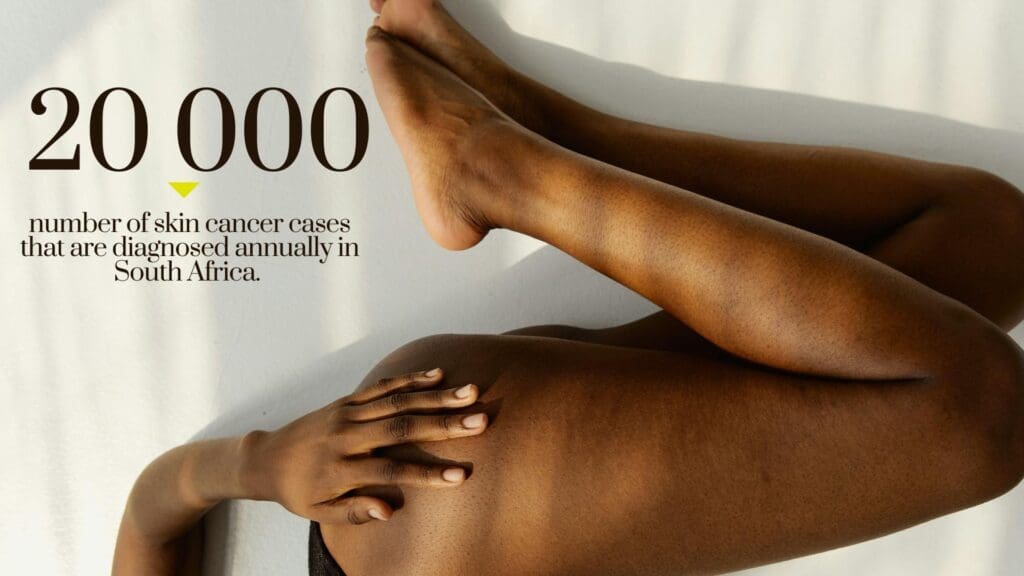
The impact is already visible. According to The Cancer Foundation of South Africa, more than 20 000 cases of skin cancer are diagnosed annually. Most are non-melanoma skin cancers, but melanoma – rarer and far more aggressive – is the one that carries the highest risk of death.
And no, it doesn’t take a lifetime of beach holidays to raise that risk. Even one blistering sunburn can significantly increase your chances of developing melanoma later in life. Repeated mild burns, the kind you brush off as “just a bit of colour,” slowly add up, causing DNA damage that doesn’t reverse with time.
Can People With Darker Skin Tones Tan?
There’s also a dangerous misconception that darker skin tones are exempt from sun damage. They’re not. “Yes, that visible darkening after sun exposure is called a tan and it happens in all skin tones,” explains dermatologist Dr Tarryn Jacobs. “Individuals with darker skin that contains more melanin (a pigment that gives skin its colour) are less likely to experience sunburns and more likely to experience tanning after exposure to sunlight.”
It is also important to note that all skin types can develop skin cancer, including melanoma. While melanin offers some natural protection, it doesn’t provide immunity.
In darker skin types, melanoma often occurs on sun-protected areas such as the palms, soles of the feet or under the nails, and is not believed to be linked to sun exposure. Because of this, it is frequently diagnosed later, when outcomes are worse.
READ MORE: Is Sunscreen Toxic? Experts – And Science – Weigh In On Viral Claims
Can You Still Tan While Wearing Sunscreen?
“Yes, because no sunscreen blocks 100% of UV rays,” explains Dr Jacobs. “This is especially true if you apply too little (most people do), if you do not reapply or if you’re in the sun for long periods.” Sadly it’s a reality that most people go SPF-less.
“It’s also important to remember that sunscreen is just one part of a sun protection strategy, it should go hand in hand with seeking shade [and] wearing hats and sun protective clothing.”

READ MORE: The 9 Best Editor-Approved Sunscreens In South Africa – They’re Actually Really Good
Can You Tan Without Damaging Your Skin?
Beyond cancer, chronic sun exposure fast-tracks premature skin ageing in the form of fine lines and wrinkles, pigmentation and eye damage, including cataracts. These aren’t just aesthetic concerns; they’re visible markers of long-term cellular injury.
So while the heat lingers and the tans keep creeping in, planned or not, it’s worth remembering this: in South Africa, sun exposure is inevitable, but skin damage doesn’t have to be.
Frequently Asked Questions
Does a tan mean your skin is healthy?
No. Dermatologists say a tan is a sign your skin has already experienced UV damage.
Which UV rays cause tanning?
Both UVA and UVB contribute to tanning and skin damage.
Can you tan through clouds?
Yes. UV rays can penetrate cloud cover.