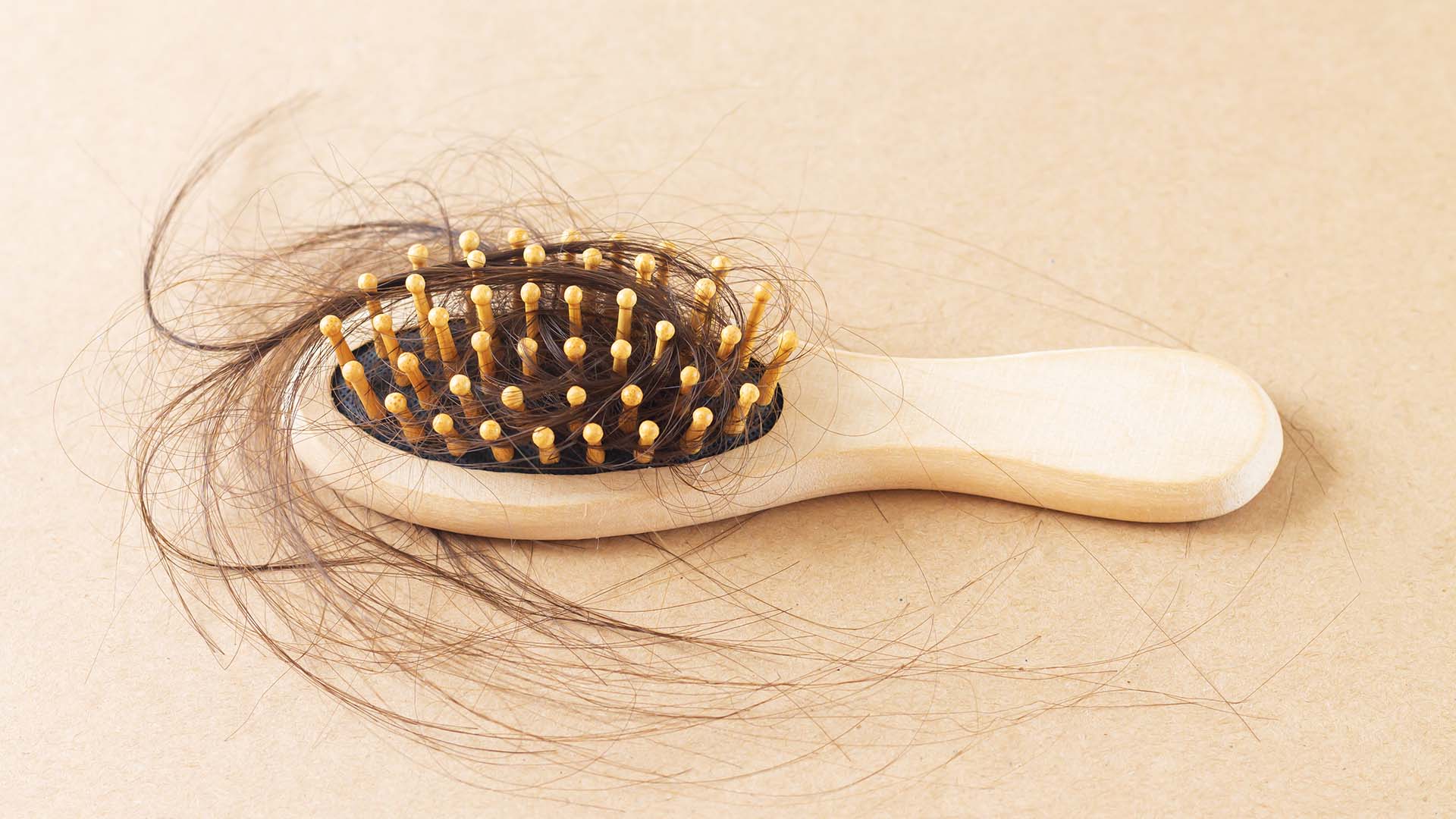
The last few years have created havoc for everyone’s bingo cards, with unprecedented events popping up everywhere like a demented game of Spider Stomp. Even with a cost-of-living crisis, South Africans have flocked to weight-loss medications, GLP-1s, in droves, making it the most popular pharmaceutical product in the country. But with rapid uptake, physicians and health practitioners have noticed a (unprecedented!) new trend: many people on GLP-1s are experiencing hair loss. So, what gives? We tapped the experts for answers.
Meet the experts: Dr Kashmal Kalan is the Medical Director of Alvi Armani, a hair restoration clinic. Dr Gerhard Vosloo is a medical doctor at Monumed with a specialisation in sports medicine. Dr Tommie Smook is a medical practitioner and weight-management specialist at Dr Smook and Partners.
How Exactly Do GLP-1 Meds Work, Anyway?
GLP-1 (Glucagon-like peptide-1) is a naturally occurring hormone produced in your gut that regulates blood sugar and appetite. Since these two factors heavily impact the inner workings of obesity in the body, the synthetic medicine (such as semaglutide and tirzepatide) works to regulate these processes. It curbs hunger by slowing the emptying of the stomach, which leaves you feeling fuller for longer.
GLP-1s also improve overall metabolic function. “We’re seeing remarkable transformations in men and women who are safely losing between 10% and 20% of their body weight with GLP-1 medication, combined with realistic dietary and exercise habits,” says Dr Tommie Smook, medical practitioner and weight-management specialist at Dr Smook and Partners. “In some exceptional cases, we’ve even seen patients lose over 150 kilograms within the space of a year,” says Dr Smook. “That kind of progress has major implications for health, and can dramatically reduce the risk and severity of conditions such as type-2 diabetes.”
READ MORE: Is Psyllium Husk A Cheap Ozempic Alternative?
Why Do So Many People On GLP-1s Have Hair Loss?
For Dr Kashmal Kalan, medical director of Alvi Armani, a hair restoration clinic, there was a notable uptick in hair loss patients in his clinic about six months to a year after GLP-1s like Ozempic, Mounjaro, Wegovy and Zepbound became widely used for weight loss and not only diabetes management. “As prescription volumes increased,” explains Dr Kalan, “so did the number of patients presenting with sudden shedding.” He also noted that the majority of these patients were/are women. (Dr Kalan clarified that this gender-based disparity is likely because women are more likely to seek medical attention early on.)
As to why so many people on GLP-1s experience alarming hair loss, Dr Kalan says it’s down to physiological stress (like a machine under pressure) and the body’s adaptive response to that stress. “The trigger is the physiological stress associated with rapid weight reduction and reduced nutritional intake,” says Dr Kalan. The long story about why GLP-1s are linked to hair loss starts with understanding how hair works in the first place.
1. The human body has a to-do list
If your body were an episode of The Pitt, your hair would be that one patient shouting in the waiting room because of a stubbed toe. That’s because, simply put, your luscious mane is not essential to survival. The body prioritises other critical tasks like keeping your heart beating in time, fending off infection and fighting through the sleep you didn’t give it because you were binge-watching Bridgerton until midnight.
On GLP-1s, food is restricted unexpectedly, because you’re eating less. Rapidly halting your food intake and suddenly keeping your stomach a quarter full means your body is seeking out nutrients to fill the void. The little it does have goes straight to the essentials.
2. Weight loss is stressful – for your body
“When the body experiences stress – whether through rapid fat loss, hormonal shifts, illness, or nutritional restriction – it reallocates resources to protect vital systems,” explains Dr Kalan. “Hair growth is one of the first processes to be downregulated.”
And, adds Dr Kalan, hair is already “metabolically demanding,” requiring “consistent access to protein, iron, zinc, and a range of micronutrients to maintain its growth cycle”. Anyone who’s tried to grow their hair would know that extended tresses need “a steady and significant supply of energy, oxygen, and micronutrients,” says Dr Kalan.
“Healthy hair growth depends on the body perceiving that resources are abundant. When nutrients are scarce, the body conserves energy by shifting follicles into a resting phase.”
TL,DR: When your food intake plummets, your hair exits the party early. This does not mean that GLP-1 actually causes hair loss, but rather that the body’s response to the medication can trigger it.
3. Hair loss becomes obvious only months after it starts
The hair growth cycle includes a pause period built into the system. Known as telogen, it’s a temporary break when a large number of follicles shift into a resting phase. Telogen lasts about three to four months in normal circumstances. But the telogen effluvium phase is a hair resting phase caused by bodily stress – hormonal changes, illness, severe stress, or rapid weight loss. “When the body experiences physiological stress,” explains Dr Gerhard Vosloo, a medical doctor at Monumed with a specialisation in sports medicine,” a larger proportion of hair follicles shift prematurely from the growth phase into the resting phase.”
The kicker? You’ll only notice the missing strands two to three months after the trigger. “This has been documented for decades in contexts entirely unrelated to GLP-1 therapy, including bariatric surgery and crash dieting,” explains Dr Vosloo. “The trigger [is] often linked to the speed and magnitude of weight loss rather than a clear deficiency.” During TE, you could experience hundreds of hairs drifting away from your scalp daily. But unlike a sock in the washing machine, your hair will find its way back to you, says Dr Kalan.
Is GLP-1 Hair Loss Reversible?
Yes – most of the time, experts agree. “Once weight stabilises and nutritional intake improves, the hair cycle generally normalises,” says Dr Kalan. However, in some cases, GLP-1 hair loss can reveal an existing genetic hair loss called androgenetic alopecia, which affects about half of both men and women. “While rapid weight loss does not create this condition, it can reveal it sooner than expected,” says Dr Kalan, adding that the sudden hair loss could open the door to “more persistent thinning, a progression that is emotionally difficult precisely because it feels so unexpected.”
According to Dr Kalan, hair should return from six to nine months, which is generally when your body would stabilise. If, after that time, your hair keeps shedding, go get the issue assessed, he says.
READ MORE: Why Is It So Common To Regain Weight After Losing?
How To Properly Support Your Body On GLP-1s
So is hair loss from using GLP-1s inevitable? Absolutely not, say Dr Vosloo and Dr Kalan. “This is why medically guided weight loss is so important,” emphasises Dr Kalan. “GLP-1 medications can be powerful tools, but they must be paired with nutritional planning.”
Dr Vosloo notes that in his practice, the weight loss meds are given as part of a larger programme. “In structured medical programmes where protein intake is protected, resistance training is mandatory, micronutrients are monitored, and weight loss velocity is controlled, clinically significant hair shedding is far less common,” says Dr Vosloo.
If you’re trying GLP-1s, get your nutrition in order
“The body can tolerate change; what it struggles with is deprivation disguised as progress,” explains Dr Kalan. “The conversation should not be framed as ‘GLP-1s cause hair loss,’” says Dr Vosloo, “but rather: ‘Rapid, poorly supported weight loss can trigger temporary shedding’”. To avoid this, Dr Vosloo highlights these important steps.
- Prioritise protein at every meal
- Engage in resistance training at least two to three times per week
- Maintain adequate hydration (with electrolyte support)
- Eat slowly and mindfully
- Monitor bowel habits
- Have regular medical follow-ups and monitoring
Bottom line: The speed of change is critical, says Dr Kalan. “Gradual, steady weight loss allows the body time to adapt hormonally and metabolically. Rapid loss, particularly when paired with appetite suppression, elevated stress hormones, or inadequate protein intake, creates a perfect storm for hair disruption.”
READ MORE: These Daily Habits That Could Be Behind Your Hair Loss