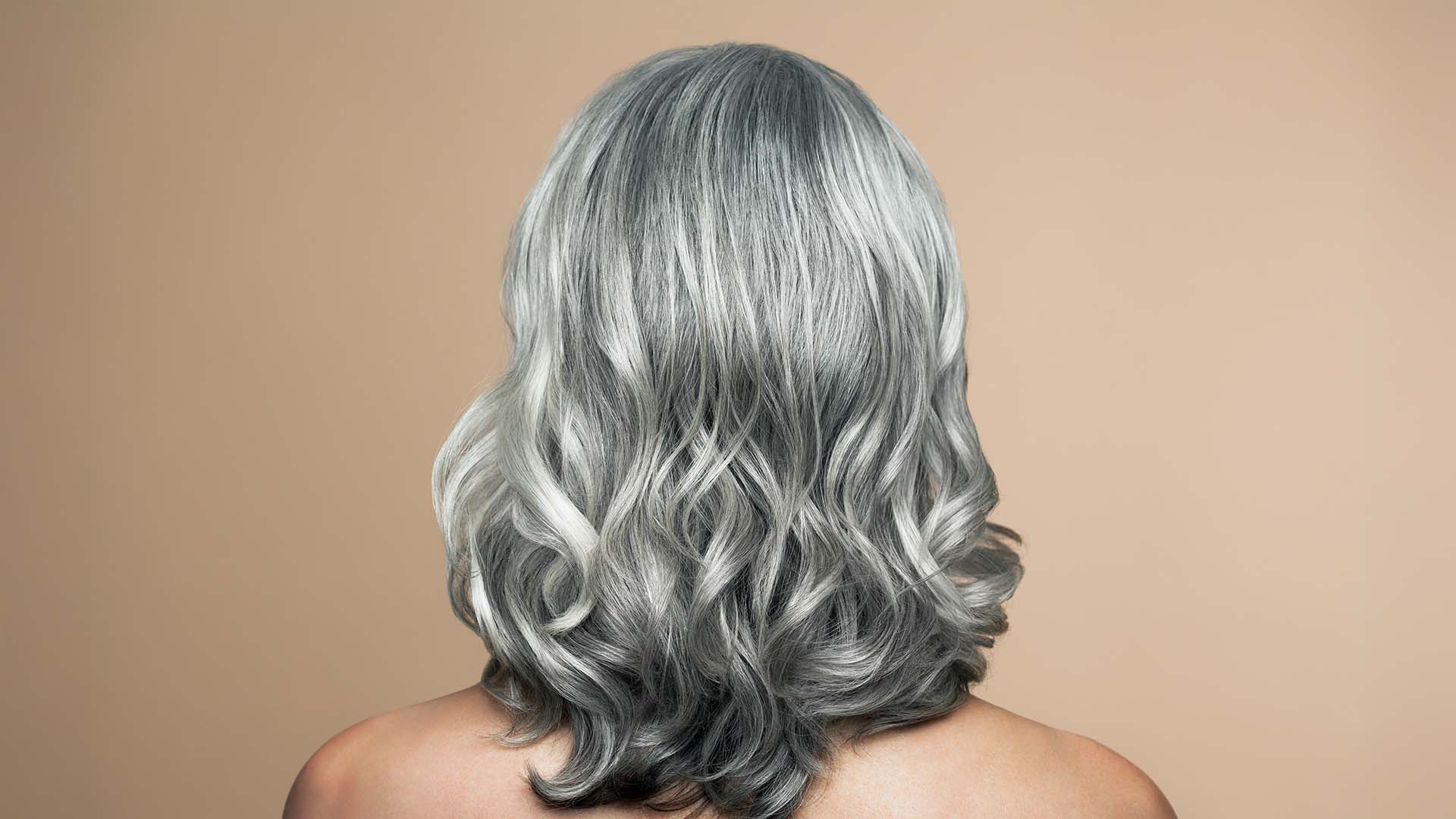
Ask any woman and she’ll tell you that hair is more than just dead keratin wafting around your scalp. And when it turns grey, whether from old age or otherwise, it often brings with it a loss of confidence. For years, much was unknown about whitening strands, leading to grey hair myths, which still remain today. According to Business Research Insights, the lion’s share of the hair colour market is dedicated to covering grey hair (54% of sales), a concern across both young and older buyers. Other than covering new growth every six weeks, what can be done about whitening hair? And are any of those grey hair myths grounded in reality? We tapped experts for answers.
Meet the experts: Dr Kashmal Kalan is the medical director at Alvi Armani South Africa, a hair transplantation clinic. Dr Tarryn Jacobs is a specialist dermatologist at Life Eugene Marais Hospital, Pretoria.
So, what causes grey hair?
To understand why hair goes grey, Dr Kashmal Kalan, Medical Director at Alvi Armani, says it’s important to first understand that biological processes are at play. Melanocyte stem cells (McSCs) live within hair follicles and are responsible for the creation of melanin, the pigment that gives your hair its colour. Grey hair happens when these cells become inactive or are interrupted during pigment delivery. This means the McSCs are unable to colour the hair, creating the “grey” hue you see.
Grey hair is part of ageing…
As to what interrupts this process in the first place, Dr Kalan says that over time, genetics and ageing create the conditions for oxidative stress to build up in the hair follicle, “damaging melanocytes and reducing their ability to produce pigment. Eventually, new hairs grow out with less colour or none appearing grey or white.”
Dr Tarryn Jacobs, specialist dermatologist at Life Eugene Marais Hospital, Pretoria, says that this ageing process usually takes place from around the age of 40 to 45 years of age. Interestingly, premature greying is defined according to genetics. If you’re Caucasian, seeing greys before the age of 20 is considered premature, whereas for Black populations, the defined age is before the age of 30.
… But it can also crop up in other ways
Unfortunately, ageing is not the only contributor to whitened hair. Dr Jacobs says that underlying medical conditions, genetics and even lifestyle factors contribute to grey hair. Things like stress, exposure to UV radiation, smoking and dietary deficiencies all play a role.
READ MORE: Your Hair Loss Might Be Caused By The Summer Sun. Here’s What You Need To Do
Does plucking greys create even more grey hair?
We’ll end your misery about this grey hair myth fast: the answer is no, say both Dr Jacobs and Dr Kalan. “Plucking a grey hair does not cause more grey hairs to grow. Each follicle operates independently,” explains Dr Kalan. And, while it might feel good to see fewer greys, derms warn about thinning hair. “I think the biggest risk is if it becomes a habit to pluck away all your greys you may eventually notice hair thinning!” says Dr Jacobs.
Can you prevent your hair from greying?
“Genetics largely determines when you start greying and how quickly it progresses,” says Dr Kalan. Unfortunately, there’s no proven scientific method to halt your hair’s melanin dumping.
So, what can you do? Slow the process down by paying attention to maintaining excellent nutrition, says Dr Kalan. Habits like “maintaining good nutritional status (especially B vitamins and trace elements), minimising oxidative stress (e.g. smoking cessation) and managing chronic medical conditions” can slow down the rate at which your hair goes grey, but, Dr Kalan stresses, it can’t reverse or stop greying completely.
READ MORE: The Exact Ingredients For Better Hair Growth, According To Experts