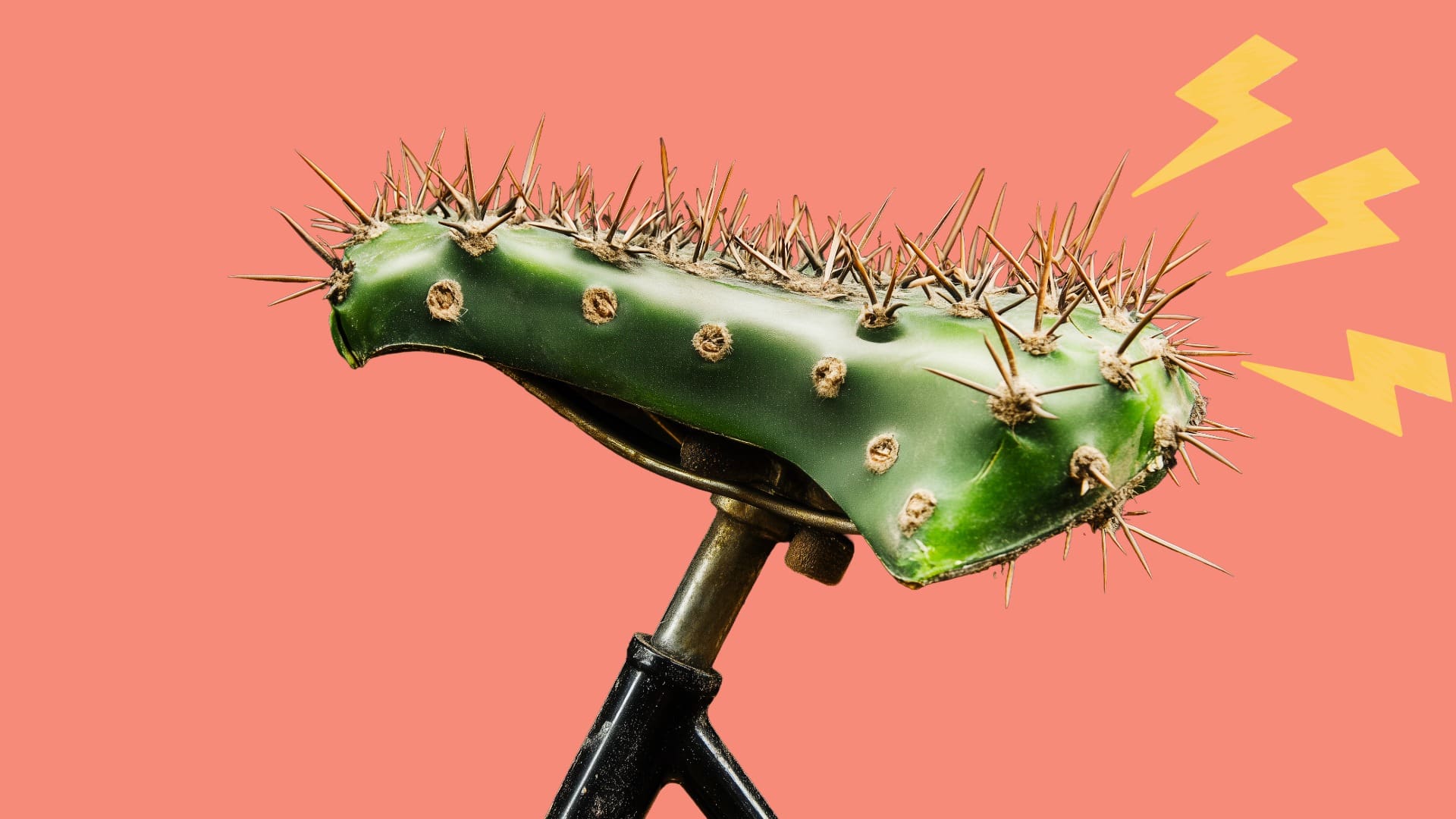
Have you ever experienced pain while cycling or afterwards? And we don’t mean from muscle fatigue after pushing up crazy climbs. Cycling pain – especially in the pelvic area – affects 60-70% of female cyclists, according to some estimates. We all know how important it is to get the right running shoes to prevent injuries and improve performance, but what about when it comes to cycling? Experts find that cycling pain (even in spin class) caused by prolonged pressure from the bike saddle can create symptoms like numbness, tingling, or pain in the pelvic or genital area. Sports scientist and expert bike fitter Willem Landman works with all kinds of cyclists, from beginner roadies to professional mountain bikers. We asked him some questions about how to prevent cycling saddle pain and what women should look out for, specifically.
Meet the expert: Willem Landman is an expert bike fitter and works with the Specialized Stellenbosch Experience Centre.
Having The Right Saddle Can Prevent Cycling Saddle Pain
Willem: “The number one issue on the bike, in my experience, is saddle discomfort, and an honourable mention of knee pain is in order. Saddle height, cleat positioning, saddle fore and aft, saddle tilt, improper arch support, handlebar reach and height can all be contributors to knee pain.
The key difference in men’s and women’s fitting would be your saddle. Male and female pelvis structures and anatomy differ vastly, and it’s important to have the proper saddle for your own body. It’s also important to understand that saddle issues are very common and that you shouldn’t be afraid to mention this to your bike fitter. On average, women need broader saddles than men. In terms of the actual fitting of the bike, your riding style has a bigger impact on how the bike gets adjusted than what your gender has. For those who struggle with injuries or discomfort on a bike, a professional bike fitment will make a massive difference. Even if you don’t have any issues and everything feels fine, it’s still worth going for the fitment. Countless times, people have commented on how big a difference small adjustments can make.”
Good Core Strength Is Essential For Preventing Pain
Willem: “Very often, discomfort on the bike can be traced back to the lack of strength, specifically in your core. Flexibility and strength play an enormous role in bike fitting. If your goal is to be aerodynamic on a triathlon bike, flexibility is crucial. Your body needs to be able to comfortably operate in those positions while being strong enough to generate power. There is no substitute for strength. Strong muscles push on the pedals harder, which in turn makes you faster. Simple as that. Those are tough conversations to have with people, as it takes sacrifice and discipline to address those issues.”
READ MORE: The Ultimate Core Workout For Abs Of Steel – From A Trainer
Weight Changes Can Affect Your Bicycle Comfort
“If anything changes in your body, like your flexibility, an injury, childbirth, weight loss or gain, riding goals, then it’s worth having your bike fit looked at,” says Landman.
Sometimes, Pain After A Professional Fitting Is Normal
W: “The longer you’ve been riding in an ‘incorrect’ position, the longer it will take for your body to adapt. It is normal to feel muscles working in different ways after you’ve had a bike fitment. During the follow-up appointment, we expect to see an improvement in stability and symmetry. We work on an adaptation period of between four and six weeks. We offer a follow-up appointment included in the price of the first fitment, to address any small changes that are needed.”
READ MORE: 5 Pro Tips You Need For Your First Cycle Race
This article was written by Amy Hopkins.