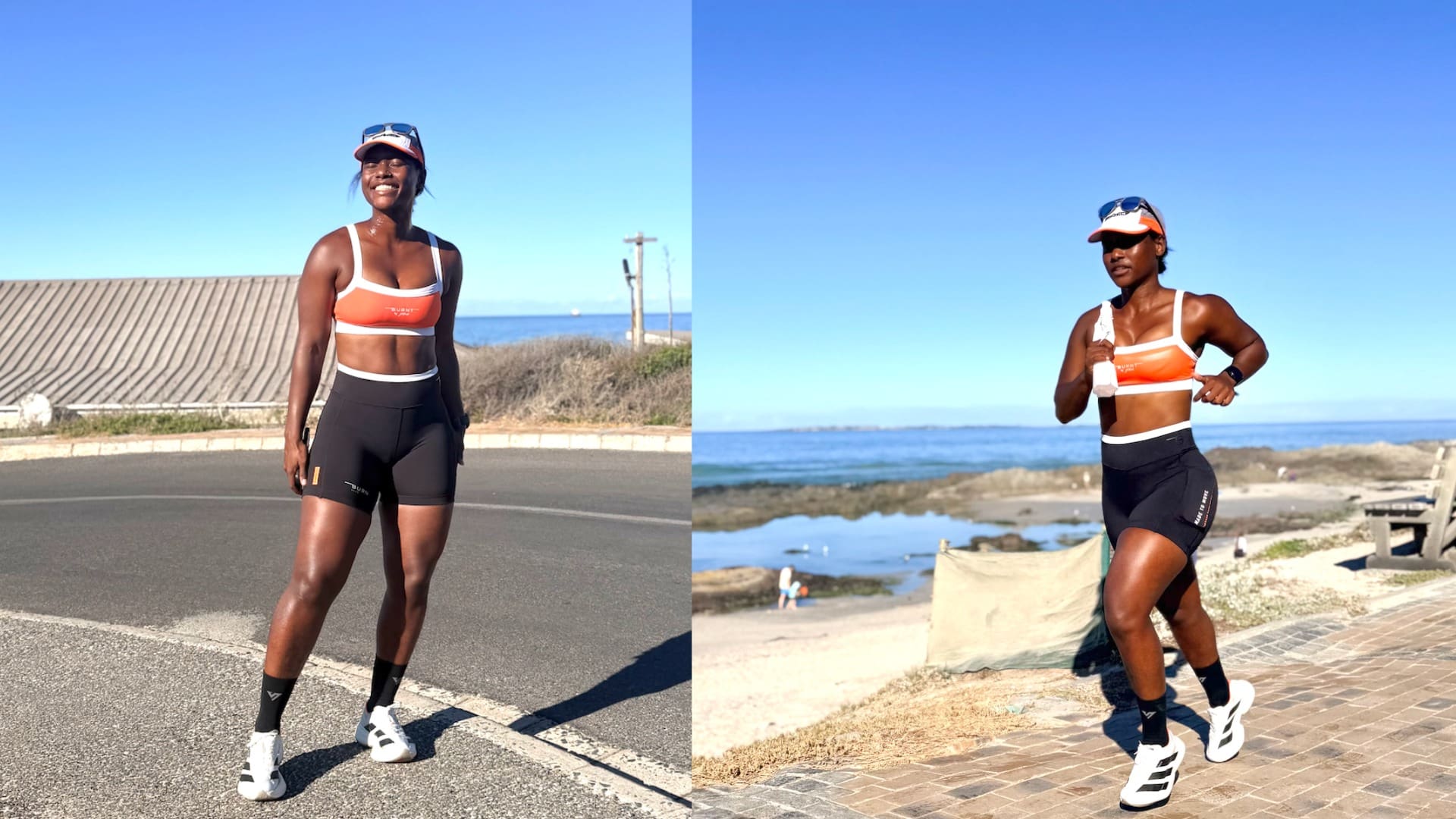
Khanya Mazibu had just turned 30 when she moved from her bustling metropolis to the quiet rural area of Lusikisiki in the Eastern Cape. A mover from day one, Khanya felt compelled to take up running. But with each new distance, she felt herself suffering from running burnout, chasing one new PB and distance to another. Here, she shares her story from runner’s burnout to recovery.
“I can’t just chill and not do anything” – How Khanya Found Running
33-Year-old civil engineer Khanya Mazibu had been sent to Lusikisiki three years previously for work. The town’s name whispers the essence of the place: onomatopoeia of the sound the winds make as it winds itself through the reeds in the fields. Quiet.
Situated in a rural area, Khanya’s long stretch of isolation and boredom led to a creeping depression. As a child, she’d been a sprinter in athletics and at varsity, she took up different sports. “As life went on, I was like, ‘I can’t exactly just chill and not do anything’,” she remarks. Now in the natural open – the closest town was 60km away, by gravel – with no formal gym, Khanya gained weight she didn’t like.
Having gained some weight and without access to a gym, Khanya elected to lace up and hit the open road. Though she was a slow runner, regular bouts helped clear her head and gave her mental clarity to help secure a new job.
READ MORE: The Best Strength Exercises For Female Runners To Prevent Injury, According To Studies
“I thought I just needed to run consistently” – Khanya’s Beginner Runner Journey
In order to take up running, Khanya decided to pick a distance to train for. Naturally, she decided 21km – half-marathon – was the right fit. “Yes,” Khanya confirms. “I skipped 10[km].” Over the course of two months, she dedicated herself to training for a half-marathon. “I thought I just needed to run consistently,” she recalls of her beginner days. “I would wake up, run five, run 10[km]. So I just would build up, not knowing that I had to do all these things [like speedwork, etc] to supplement this 21km.”
Newly employed in Cape Town, Khanya joined the litany of runners pounding the city’s pavements. The day of the 21km race came and Khanya crossed the finish line successfully.
The bug had bitten: having completed a half-marathon with just two months of preparation, Khanya decided to diversify her training. “I ran the 21km, but then I was like, ‘Surely I can do better.’ I started searching: how do people run faster or better?”
“Let me test my body” – Khanya’s Marathon Journey
Her research culminated in a new roster of sprint sessions, hill repeats, and recovery runs, in addition to strength training. Enter: her longest run yet, the full marathon. Khanya went ahead with just her usual training, “I thought, ‘Let me just test my body,’” she says. She finished her first marathon, the Sanlam Cape Town Marathon, with a time of 5h45min. It was great, but not enough to secure an entry into the coveted Two Oceans Marathon.
On social media, Khanya unlocked a community of like-minded runners. “Instagram is such a powerful tool,” she muses. “I met a coach to give me guidelines, I found a training programme from a friend, and he introduced me to different types of runs”. The second time around, she shaved a full 36 minutes off her Cape Town Marathon time. While she had run a truly impressive race, it still wasn’t enough to get her into the Two Oceans race – she needed to shave off a further nine minutes.
READ MORE: I Didn’t Fit The ‘Runner’s Body’ – But I Still Finished Two Half-Marathons”
But all the intervals, strength workouts and qualifying for different races left Khanya burnt out. “It becomes stressful,” Khanya admits. “Yes, I’m running for mental health. Yes, I’m running to improve myself, but it also puts me in a corner of, ‘I want to improve, but it becomes stressful now;’ it takes away from what it was supposed to be.” Eventually, Khanya bagged her qualification, just two months before the Two Oceans – which takes place over Easter weekend in April in Cape Town. She felt “frustrated from the previous marathon, in which I had put in so much work,” she says. Training for the race “took such a mental toll on me,” Khanya reflects. “It was the most frustrating thing I’ve ever experienced.”
Why? Within those two short months, Khanya needed to rack up mileage after already having run three marathons trying to qualify. She needed to keep up her interval sessions, her strength training, waking up early, motivating herself.
“Even though I know that I’m capable of doing this, I still have to show up. I still have to go to work. I still have to do so many other things,” Khanya shares about those months. She ran the race, making it within the seven-hour cut-off range and felt great about what her body had been capable of.
Reaching running burnout: “It took such a mental toll on me”
After finishing Two Oceans, Khanya thought, “What now?” Having proved herself – but pushed herself to her limit – she decided to step back from running races.
“I put myself under pressure; running a marathon based on time,” she says. “I just need to take a step back a bit, understand why I run, so that I don’t fall out of love with this thing that is supposed to be my happy place.”
Now, still on her sabbatical, Khanya is reacquainting herself with running mindfully, taking time to be comfortable and improve skills like hill climbing. “I think we get caught up,” she says. “People just want to improve their time; no one wants to get good basics.” Now that she can smell the proverbial flowers, she’s considering taking up Iron Man – but in the future, when she’s truly ready.
READ MORE: 18 Running Clubs In South Africa To Kickstart Your Journey
Running Tips from Khanya
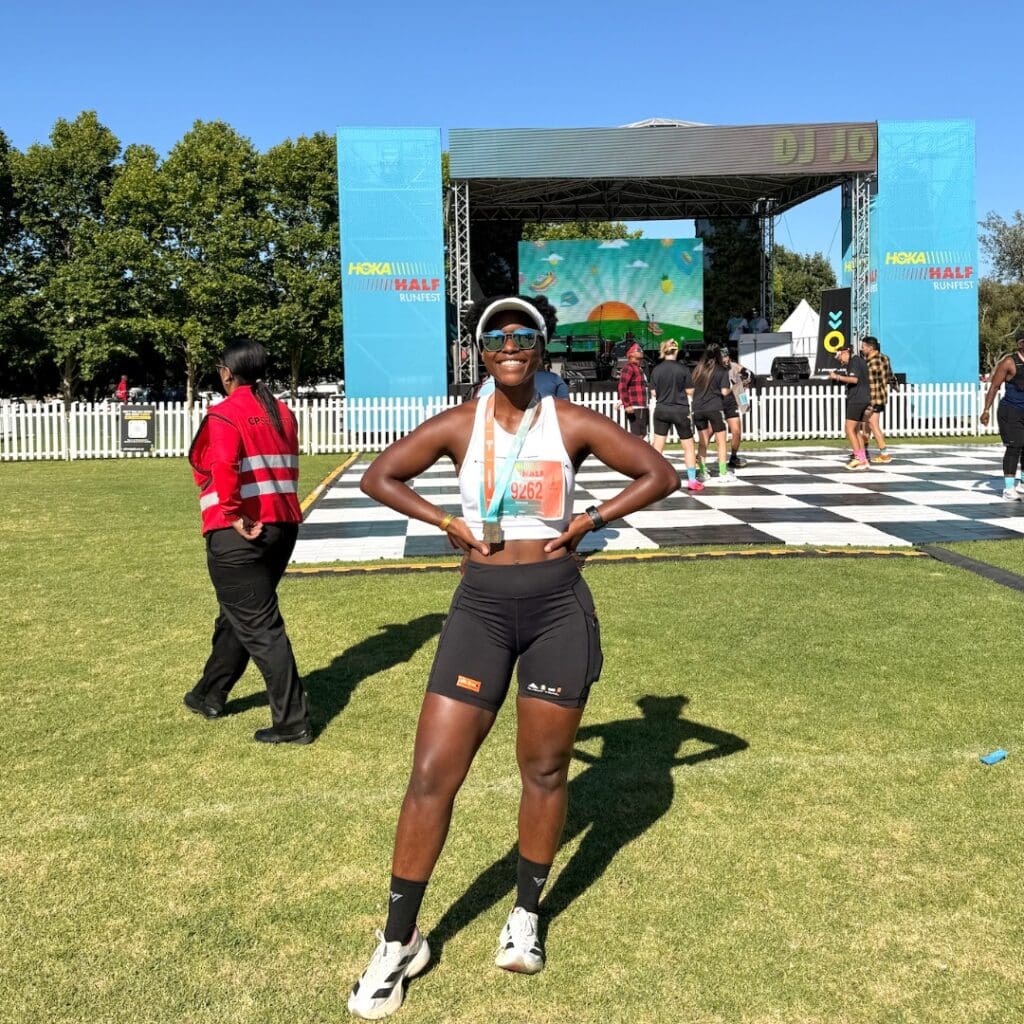
Go as slowly as possible. It sounds counterintuitive, but Khanya wishes she’d gone this route. “People just want to continue running and improving their marathon times. No one wants to go back. If you’d ask me, I’d say just spend a year or two running your 10ks, 21ks, so that you can get good basics, and then from there you take it and fly!”
Do some research. Running involves proper breathing techniques and incorporating different training techniques, says Khanya. Diving into the deep end without guidance is a recipe for running burnout.
Don’t go chasing waterfalls metrics. “You don’t have to be the fastest runner, but you can just be a capable runner… It’s important to do things in moderation.”
This story, as told to Michelle October, was first published in the March/April 2026 issue of Women’s Health Magazine South Africa.