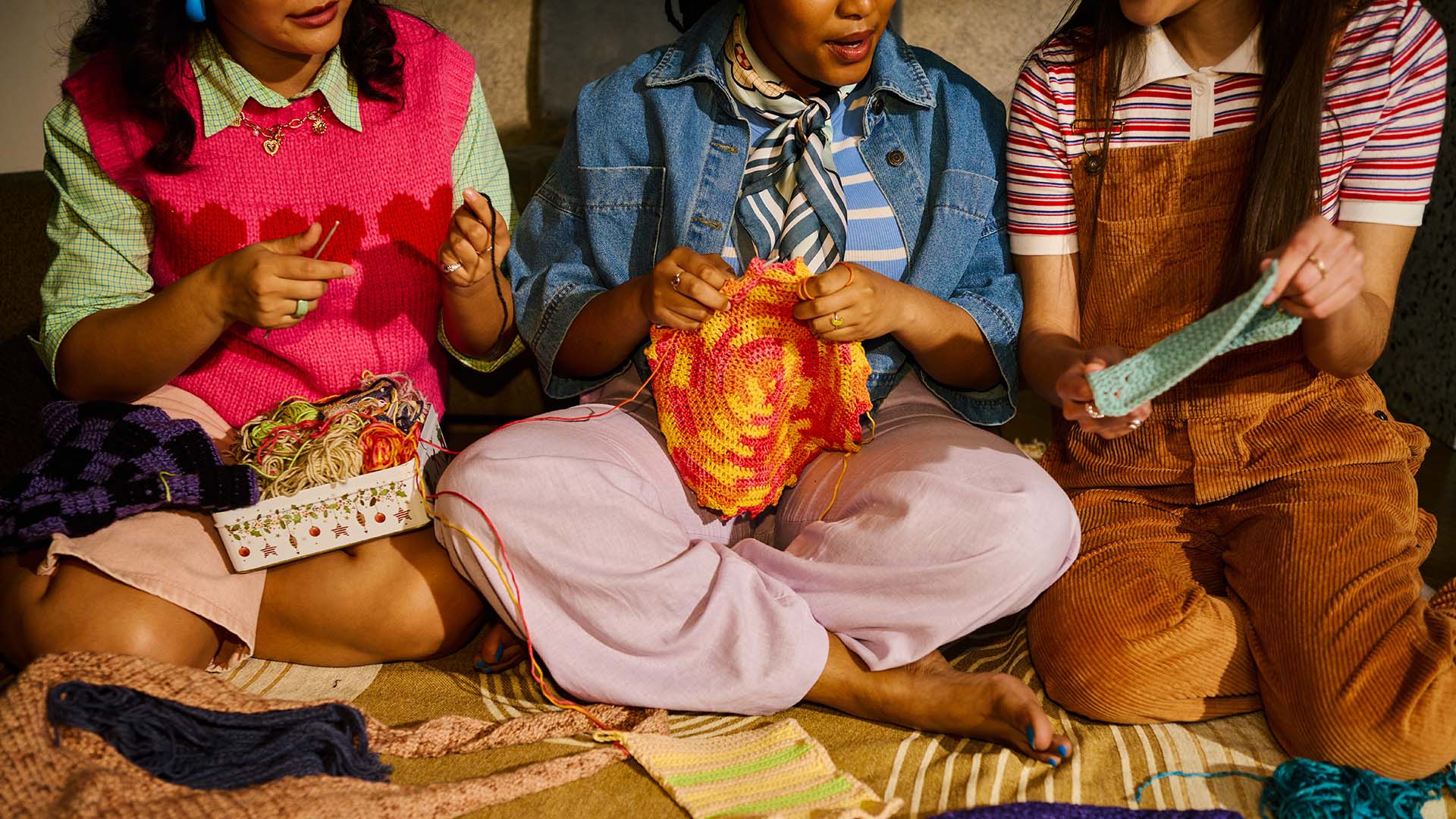
Have you noticed an uptick in women embracing ‘grandma hobbies’? Turns out, it’s got nothing to do with nostalgia, and everything to do with our brains being quietly desperate for what these hobbies provide.
A ‘grandma hobby’ is an activity that requires deep focus, patience, zero screen time and usually involves your hands. Hobbies like knitting, baking, gardening and cross-stitch are gaining popularity among millennials who are seeking activities to help them unwind and recharge.
Dr Kelly Lambert, a professor of behavioural neuroscience at the University of Richmond, Virginia, coined the term “behaviourceuticals” to describe activities like embroidery, knitting and cross-stitch that function as drug-free medicine for the brain. “I introduced the term to suggest that physical effort can activate reward and problem-solving areas of the brain and related neurochemicals in intentional ways,” Lambert explains. “If you’re learning something new, then neuroplasticity may be enhanced. If the activity is done in the presence of others, then oxytocin is activated. So behaviourceuticals may be a preventive and therapeutic approach that just keeps on giving.”
If you’ve been considering finding yourself a hobby, here are five neuroscience-backed reasons a ‘grandma hobby’ could be the way to go.
1. Good For Your Mental Health
According to Dr Lambert, who has spent years studying what happens to our brains when we make things with our hands, activities like ‘grandma hobbies’ satisfy a primal human need to create and could help combat anxiety and depression. “As effort is related to positive outcomes – cooking results in an enjoyable meal, knitting a scarf for a gift – this likely increases a sense of control over at least small components of our lives,” she explains. “Uncertainty and a lack of sense of control can exacerbate the symptoms of depression, so gaining control and a greater sense of self-efficacy is beneficial.”
In a world where we buy everything we need instead of making it, we’ve accidentally removed the very activities that give us pleasure, meaning and a sense of accomplishment.
2. May Prevent Burnout
Burnout happens when stress accumulates in our bodies and goes unprocessed. Our bodies stay flooded with cortisol and other stress compounds, and our nervous systems never return to baseline.
But it turns out that crafting is one of the most powerful ways to metabolise stress and prevent burnout before it happens. Research from the University of British Columbia found that repetitive handwork, like knitting, creates a calming effect similar to meditation and signals to your nervous system that it’s safe.
READ MORE: 5 Doctor-Approved Strategies To Finally Cope With Year-End Burnout
3. Strengthens Neural Pathways
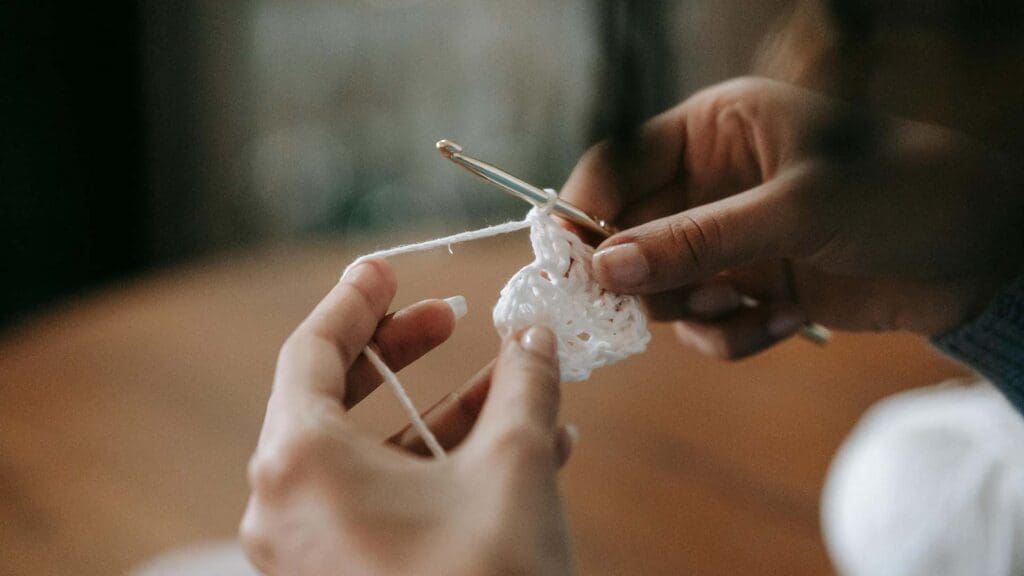
Scrolling, swiping and typing are simple, repetitive movements that barely engage the brain. But when we work with our hands, through activities like threading a needle, forming stitches and following a pattern, we’re activating and strengthening connections across different parts of the brain.
In a 2024 study from the Norwegian University of Science and Technology comparing handwriting to typing, researchers found handwriting activated far more brain networks than typing. Each letter requires a different hand movement, engaging distinct areas of the brain. Whereas typing uses the same finger movement for every letter, barely challenging the brain at all.
As told by brain researcher and Professor of Neuropsychology at NTNU, Audrey van der Meer to the New York Times, “skills involving fine motor control of the hands are excellent training and superstimulation for the brain.” The same applies to creative hobbies. Each stitch in embroidery or knitting requires different movements and focus, acting like strength training for your brain.
READ MORE: A Lot Of People Get Self-Care Wrong – Here’s How To Build A Routine That Actually Works
4. Provides Healthy Stress For Your Brain
Modern life has removed friction from nearly everything. We now have one-click purchasing, on-demand streaming and same-day delivery. Creative health scientist, Katina Bajaj, says that our brains crave “novelty, challenge and even discomfort,” and need friction – or “good” stress – to grow.
Learning a new stitch pattern, working through a mistake in your embroidery, or figuring out how to fix a dropped stitch are all challenges our brain thrives on and intentional ways we can add friction back into our lives to improve our brain health.
READ MORE: 6 Things Neurologists Would Never Do If They Wanted To Protect Their Brain Health
5. Improves Memory And Attention
If you’re finding it hard to focus and have noticed your attention span shrinking, you’re not alone. Our brains have been trained to expect constant stimulation through things like notifications, auto-play and endless scrolling.
Handwork is one of the few activities that can reverse this. Research shows that people who engage in hands-on activities like knitting, embroidery and other creative hobbies are 30 to 50 percent less likely to develop mild cognitive impairment.
Why? Because creative engagement strengthens the white matter in our brains and maintains the integrity of neural networks, even into old age. Your brain is like a muscle. When you work it through complex hand movements and sustained focus, it gets stronger. When you only give it quick hits of dopamine from scrolling, it weakens. And it’s not just the quantity of dopamine that matters, it’s the quality.
Scrolling delivers spikes. Stitching delivers something steadier. Your brain, turns out, was never built for the binge.
READ MORE: Here’s How To Actually Do A Digital Detox, According To Experts
This article by Tahnee Sanders was originally published on Women’s Health AUS.